Table of Contents
Modern businesses rely on uninterrupted internet connectivity for cloud applications, video conferencing, VoIP calling, ERP software, remote access, and day-to-day communication. A single internet connection is no longer sufficient for organizations that cannot afford downtime or slow network performance.
A load balancer is a networking solution that intelligently distributes internet traffic across multiple ISP connections, ensuring higher performance, better reliability, and continuous connectivity. Whether your office has 20 employees or 500, implementing a load balancer can significantly improve your network infrastructure.
In this article, we’ll explore the key advantages of using a load balancer in a corporate office environment.
What is a Load Balancer?
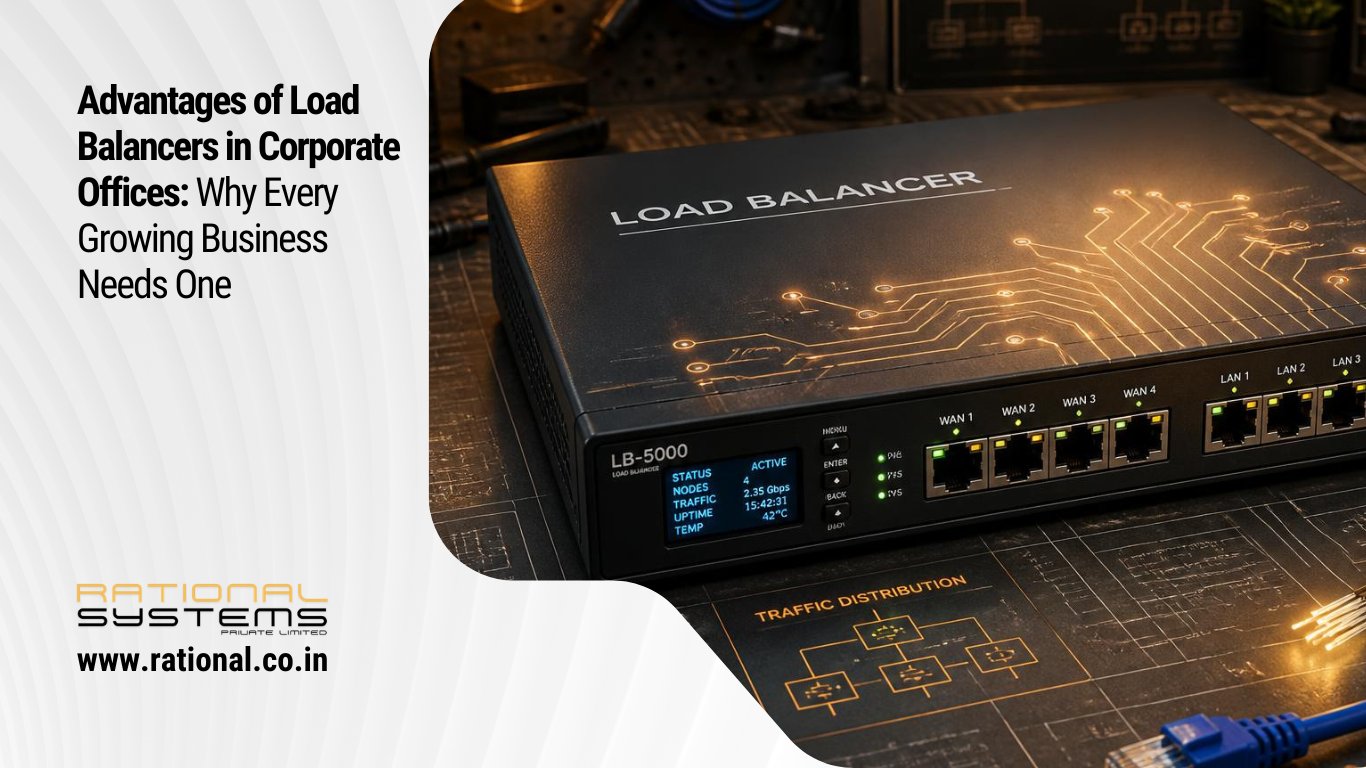
A load balancer is a network device or software solution that distributes internet traffic across two or more broadband connections. Instead of relying on a single ISP, businesses can combine multiple internet links and automatically manage traffic between them.
For example, an office may use:
- Airtel Fiber
- Jio Fiber
- Tata Tele Business Broadband
- Leased Line
- 4G/5G Backup Internet
The load balancer intelligently decides how traffic flows through these connections.
1. Eliminate Internet Downtime
One of the biggest advantages of a load balancer is automatic internet failover.
If your primary ISP experiences:
- Cable damage
- Router failure
- ISP outage
- Maintenance
the load balancer instantly shifts all traffic to the secondary internet connection without manual intervention.
Employees continue working without noticing the change.
Benefits include:
- No interruption during online meetings
- Continuous VPN connectivity
- Uninterrupted cloud application access
- Reduced business losses
2. Better Internet Speed Through Traffic Distribution
A load balancer does not simply provide backup—it also distributes network traffic intelligently.
Instead of sending every employee through one ISP, it can divide traffic across multiple connections.
For example:
- 25 users use ISP 1
- 20 users use ISP 2
- 15 users use ISP 3
This prevents congestion and improves browsing experience across the organization.
3. Improved Performance for Cloud Applications
Businesses increasingly depend on cloud services such as:
- Microsoft 365
- Google Workspace
- Microsoft Teams
- Zoom
- Salesforce
- ERP Systems
- CRM Applications
A load balancer ensures these applications receive stable internet connectivity by balancing traffic across available links.
Users experience:
- Faster page loading
- Lower latency
- Better responsiveness
- Improved productivity
4. Seamless Video Conferencing
Video conferencing requires consistent bandwidth and low latency.
Without proper traffic management:
- Audio breaks
- Frozen screens
- Call disconnections
- Poor meeting quality
A load balancer helps prioritize internet usage and prevents one overloaded ISP from affecting meetings.
This is particularly beneficial for organizations using:
- Microsoft Teams
- Zoom
- Google Meet
- Cisco Webex
5. Optimized Bandwidth Utilization
Many businesses purchase multiple internet connections but use only one while the others remain idle.
A load balancer allows organizations to utilize the bandwidth from all available ISPs effectively.
Instead of:
100 Mbps + 100 Mbps
where one link remains unused,
traffic can be intelligently distributed to maximize available internet capacity.
6. Intelligent Traffic Routing
Modern load balancers support policy-based routing.
For example:
- ERP traffic uses ISP 1
- CCTV cloud backup uses ISP 2
- Guest Wi-Fi uses ISP 3
- VPN users use ISP 4
This improves application performance and ensures business-critical services always receive adequate bandwidth.
7. Enhanced Business Continuity
Network downtime affects:
- Sales
- Customer support
- Finance
- Operations
- Remote employees
Even a one-hour internet outage can lead to lost productivity and customer dissatisfaction.
Load balancers provide redundancy that keeps the business operational during ISP failures.
8. Better VPN Performance
Many organizations connect branch offices using VPN tunnels.
If the internet connection drops:
- VPN disconnects
- Remote users lose access
- Branch connectivity fails
Advanced load balancers can automatically re-establish VPN connections using another ISP, improving reliability.
9. Cost-Effective Alternative to High-Cost Leased Lines
Businesses often purchase expensive dedicated leased lines to improve uptime.
However, combining:
- Fiber broadband
- Business broadband
- 5G backup
- Secondary ISP
through a load balancer can provide excellent reliability at a lower overall cost.
This makes load balancers an economical solution for small and medium-sized businesses.
10. Better Security Integration
Many enterprise load balancers include features such as:
- Firewall integration
- VPN server
- Intrusion prevention
- Access control
- Traffic monitoring
- Content filtering
This provides both performance improvements and enhanced network security.
11. Centralized Network Management
IT administrators gain complete visibility into internet usage.
Most enterprise load balancers provide dashboards showing:
- ISP health
- Bandwidth utilization
- Connected users
- Traffic statistics
- Application usage
- WAN status
This simplifies troubleshooting and capacity planning.
12. Scalability for Growing Businesses
As your organization grows, network demands increase.
A load balancer allows businesses to:
- Add more ISPs
- Increase bandwidth
- Support more users
- Expand branch connectivity
without redesigning the entire network.
Industries That Benefit Most
Load balancers are valuable across many sectors, including:
- Corporate Offices
- IT Companies
- BPO & Call Centers
- Manufacturing Units
- Hospitals
- Educational Institutions
- Hotels
- Retail Chains
- Financial Services
- Warehouses
- Logistics Companies
Any organization that depends on reliable internet can benefit from a load-balanced network.
Signs Your Office Needs a Load Balancer
You should consider implementing a load balancer if:
- Employees frequently complain about slow internet.
- Your business relies on cloud-based applications.
- Internet outages disrupt daily operations.
- You use multiple ISP connections.
- Your office hosts frequent video meetings.
- Remote employees access your network through VPNs.
- You need uninterrupted connectivity for business-critical operations.
Choosing the Right Load Balancer
When selecting a load balancer, consider:
- Number of WAN ports
- Automatic failover capability
- Intelligent load balancing algorithms
- VPN support
- Firewall features
- Bandwidth management
- User capacity
- Centralized monitoring
- Scalability for future growth
Selecting the right solution depends on the size of your organization, internet usage patterns, and future expansion plans.
Conclusion
Reliable internet connectivity is no longer a luxury—it’s a necessity for every modern business. A load balancer ensures that your corporate network remains fast, stable, and resilient by distributing traffic across multiple internet connections and providing automatic failover during outages.
Whether you’re a small business looking to improve internet reliability or a large enterprise managing multiple locations, investing in a load balancer can reduce downtime, enhance employee productivity, and support business continuity. As organizations continue to adopt cloud applications, hybrid work models, and real-time collaboration tools, a load balancer becomes an essential component of a robust corporate network infrastructure.
By implementing the right load balancing solution, businesses can create a more reliable, secure, and scalable network that is ready to meet today’s operational demands and tomorrow’s growth.