Table of Contents
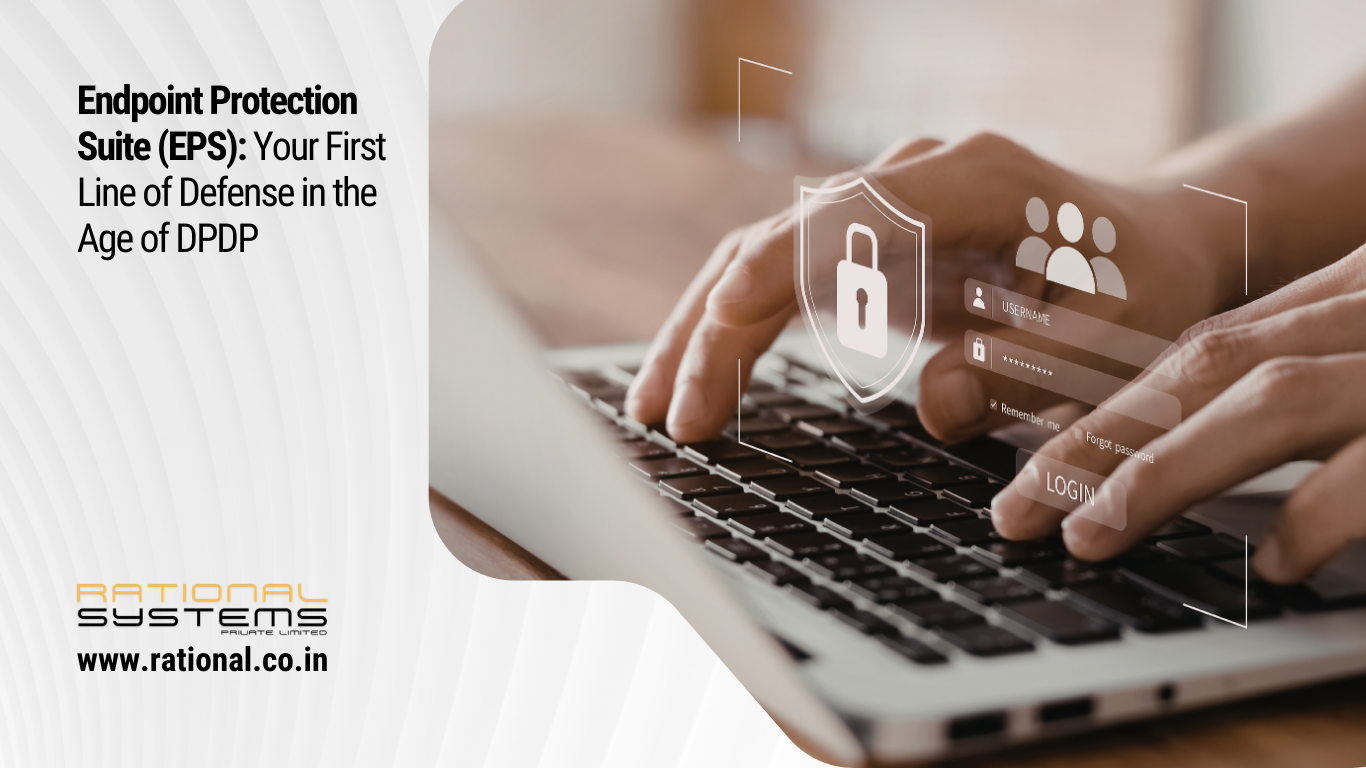
Every laptop, phone, and server in your organization is a door. Are yours locked, or just closed?
What Exactly is an ‘Endpoint’?
In cybersecurity, an endpoint is any device that connects to your corporate network. This includes laptops, desktops, smartphones, tablets, and even smart printers.
In a typical Indian SME with 50 employees, there are often over 150 active endpoints—each one a potential entry point for a breach. With the shift to hybrid work, these devices now access sensitive data from home Wi-Fi and public cafes, moving them outside the safety of your office firewall.
From Antivirus to EPS: The Evolution
A modern Endpoint Protection Suite (EPS)—often incorporating EDR (Endpoint Detection & Response)—is a unified shield.
Unlike traditional antivirus that only recognizes “known” viruses (like a security guard with a book of wanted posters), an EPS uses AI and Behavioral Analysis. It identifies suspicious patterns—like a file suddenly trying to encrypt your entire database—and stops them in real-time, even if the threat has never been seen before.
Key Insight: Cybercrime cost Indian businesses over ₹1.25 lakh crore in 2023. Most of these breaches started with a single compromised laptop.
5 Core Functions of a Modern EPS
- AI-Powered Threat Prevention: Blocks ransomware and “zero-day” attacks before they can execute.
- Granular Device Control: Prevents data leaks by restricting unauthorized USB drives or external hard disks.
- Web & App Filtering: Limits access to malicious sites and prevents the installation of unapproved, risky software.
- Centralized Management: Provides your IT team with a “single pane of glass” to monitor every device’s health instantly.
- Automated Patch Management: Automatically updates outdated software, closing the security gaps that 90% of hackers exploit.
The “DPDP Pulse”: Why EPS is Now a Legal Mandate
Under India’s Digital Personal Data Protection (DPDP) Act, organizations are “Data Fiduciaries” with a legal obligation to implement “reasonable security safeguards.” Here is why an EPS is your best legal shield:
- The 72-Hour Rule: The DPDP Rules (2025) require notifying the Data Protection Board of a breach within 72 hours. Without an EPS to provide real-time alerts and logs, most companies wouldn’t even discover a breach within that window, leading to massive non-compliance penalties.
- Duty to Protect: Section 8(5) mandates the prevention of data misuse. An EPS provides the technical “proof of effort” required during a regulatory audit.
- Penalty Mitigation: If a breach occurs despite having a top-tier EPS like CrowdStrike or Seqrite, the Board may view it as a sophisticated attack rather than “negligence,” potentially reducing fines that can go up to ₹250 crore.
Market Leaders: Choosing Your Shield
| Product | Best For | Key Strength |
| Seqrite (Quick Heal) | Indian SMEs | DPDP-aligned, local support, and integrated DLP. |
| Microsoft Defender | M365 Users | Seamless integration with Teams, Outlook, and Azure. |
| CrowdStrike Falcon | Large Enterprises | Industry-leading AI for high-risk sectors like Finance. |
| SentinelOne | Business Continuity | “One-click rollback” to restore files after an attack. |
Your 90-Day Rollout Plan
- Month 1 (Audit): Inventory every device. You cannot protect what you cannot see.
- Month 2 (Deploy): Install EPS agents on servers first, then high-risk executive laptops.
- Month 3 (Refine): Enable USB blocking and web filtering. Conduct a “mock breach” to test your 72-hour reporting response.
The Bottom Line
Endpoint protection is no longer an “IT expense”—it is legal insurance. In an era where a single unprotected phone can lead to a ₹200 crore fine, the question isn’t whether you can afford an EPS. It’s whether your business can survive without one.